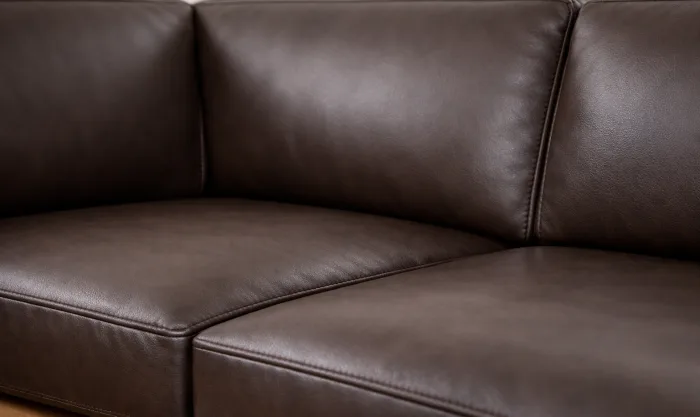
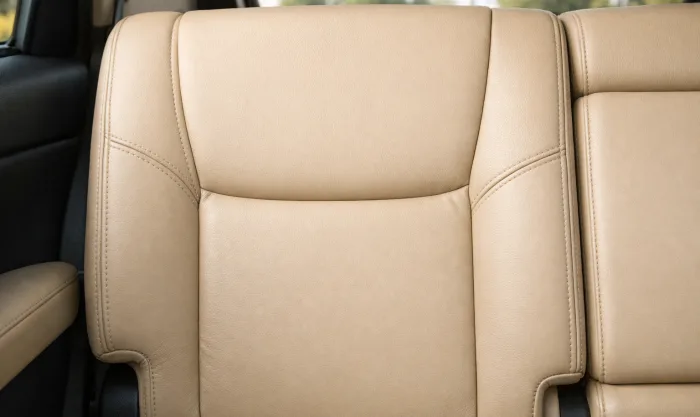
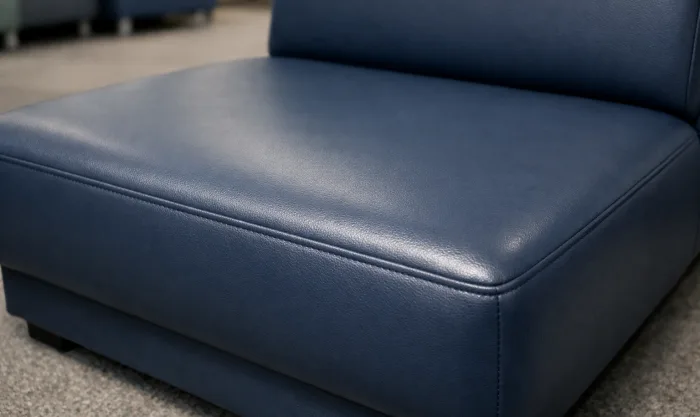
If you wiped a car seat, sofa arm, or vinyl chair and now it looks shiny in patches, feels grabby, or shows pale streaks, stop scrubbing it. That is often not “dirt left behind.” In LA heat, a strong cleaner can keep working after the wipe-down and disturb the top finish on leather or vinyl. I see this a lot on sun-exposed car interiors and on furniture that was hit with disinfectant, degreaser, or an all-purpose spray that was too aggressive. This kind of chemical residue repair is usually about figuring out whether the problem is leftover product, finish damage, or both.
How do you tell residue from real finish damage?
Start with touch and light, not more cleaner. If the area feels tacky, draggy, or slick in the wrong way, residue may still be sitting on top. If it looks cloudy, has shiny islands, or shows a dull ring where the product spread, the topcoat may have been altered. On leather, the grain should still feel consistent from one spot to the next. On vinyl, the surface should not feel gummy or “plastic-soft” in one patch and dry in another.
Here is the practical test I give homeowners and drivers: wipe a hidden spot with a clean, barely damp microfiber cloth, then let it dry fully. If the weird feel changes a little, you are likely dealing with residue. If the texture still looks stripped, blotchy, or uneven after drying, the cleaner probably disrupted the finish. In that case, more scrubbing usually makes the patch larger, not smaller. If the area is on a seat or armrest that gets sun and body contact, the damage can keep showing up even after the surface looks dry.
For a quick photo check, send the affected area before you do anything else. That is usually enough to tell whether you need local stain removal in Los Angeles, CA or a different surface treatment. A shiny, sticky patch is not the same problem as a food stain or an ink mark.
What does a proper on-site fix actually do?
The goal is not to bury the problem under silicone shine. A proper on-site visit starts by identifying what was used on the surface and what the surface actually is: finished leather, coated leather, or vinyl. Then the tech removes loose residue with the least aggressive method that will do the job. If the cleaner left behind a film, that film has to come off without grinding into the topcoat. If the cleaner etched or dried out the finish, the affected area may need controlled blending so the texture reads more evenly.
On leather, I often work in small sections so I can stop before I over-strip the good finish around the damage. On vinyl, the concern is different: some residues sit in the grain and make the surface look patchy even after basic wiping. The right process can restore a more natural feel without making the panel look freshly painted. That is especially important in car interiors, where heat keeps revealing every shortcut. If the problem is on a seat or bolster, a stain removal visit can sometimes solve it in one pass; if the finish has been chemically altered, the repair may need a more detailed surface recovery.
What should you expect? A technician should tell you whether the area can be neutralized and blended on-site, or whether the cleaner permanently changed the finish and a larger color or texture repair is needed. If someone promises to “just buff it out,” be careful. Buffing a chemical haze too hard can make a leather patch glossy in the same way a bad shoe polish job looks glossy.
How long will it last, and how do you avoid doing it again?
If the residue is removed correctly and the finish was not deeply damaged, the repair can last as long as the surrounding surface holds up. The catch is that the same habits that caused the issue can bring it back fast. In LA, I see repeated problems from disinfectants on car seats, apartment cleaning products on sofa arms, and mixed sprays used on restaurant-style vinyl seating. Heat and UV make those mistakes show sooner, but the real cause is usually product choice.
To keep it from coming back:
- Use one product at a time. Do not mix degreaser, disinfectant, and conditioner on the same spot.
- Test on a hidden area first, especially on leather with a matte finish or vinyl with texture.
- Wipe with a clean microfiber and stop once the surface is clean. More product is not better.
- Avoid soaking seams, perforations, and stitched edges; residue collects there.
- Keep coated leather and vinyl out of direct sun when possible, because heat can make a bad cleaning pass show up as shine or streaking.
If your surface still feels off after cleaning, do not keep scrubbing and do not cover it with a glossy protectant. The safest next step is to get eyes on it before the finish gets worse. You can start with stain removal in Los Angeles, and if the patch is already sticky, shiny, or streaked, we can usually tell from photos whether it is recoverable on-site. DavaLeather handles these problems in the real world, where the goal is a surface that looks and feels normal again, not artificially shiny.
Before & After