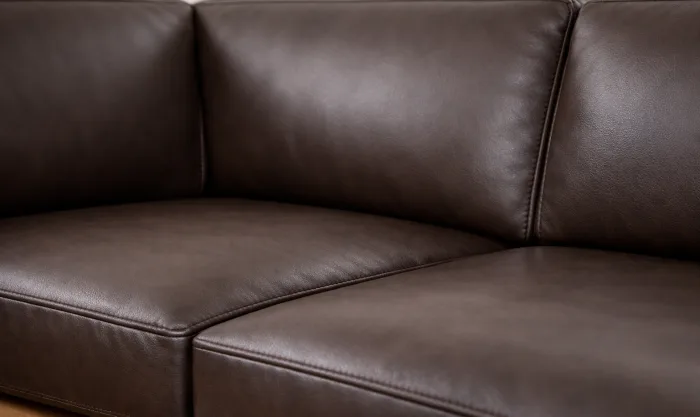
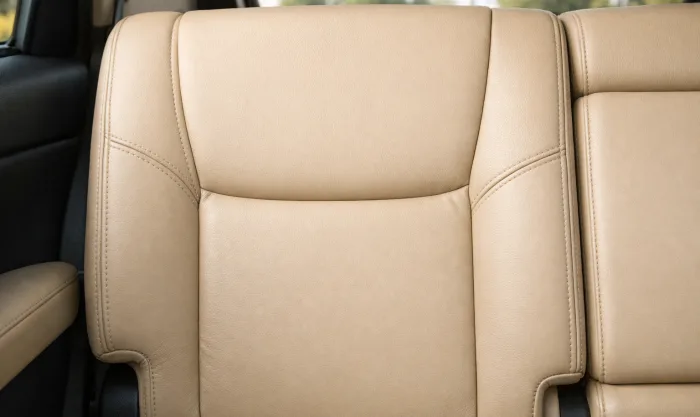
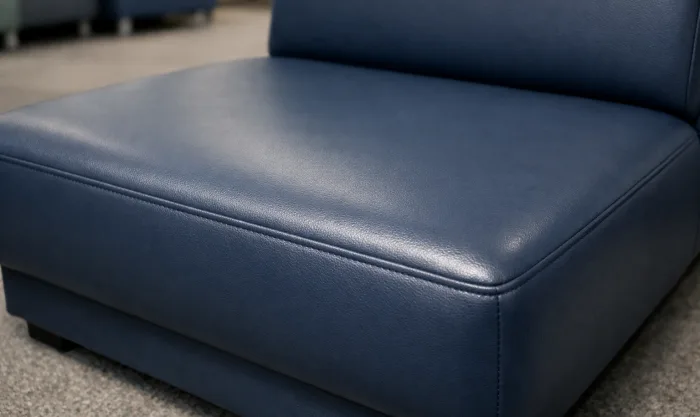
If you are staring at a corner scuff on a sofa arm, sectional edge, or seat-front panel, the first instinct is usually to rub it harder and see if it comes off. That move usually backfires. On leather and vinyl, a corner is the thinnest, hardest-working part of the piece, so over-scrubbing can strip the finish fast and turn a small leather scuff repair into a bigger color problem.
In LA daylight, that worn edge often looks worse than it does in a dim room. Bright window light hits the highest point first, so a rubbed corner reads as gray, shiny, or pale even when the rest of the panel still looks fine. If you are deciding whether to keep using it, clean it, or call for leather scuff repair, the real question is not “Can I wipe it away?” The question is whether the finish is still there or already worn through.
Is this just surface scuffing, or is the finish already gone?
Here is the quick check I tell homeowners to do before they touch the spot again: look at the damage from the side, not straight on. If the area only looks darker with dirt transfer or lighter with surface abrasion, it may be a surface scuff. If you see a raw, fuzzy, chalky, or sticky-looking edge, the topcoat is likely worn through.
Use a dry microfiber cloth first, then a barely damp cloth with mild soap if needed. Stop there. If the color improves a little and the texture still feels smooth, that is a good sign. If the edge keeps getting lighter every time you wipe it, you are thinning the finish instead of cleaning it. That is especially common on armrest corners, seat-front corners, and the sharp edge of a sectional chaise where shoes, bags, pets, and cleaning towels keep brushing the same spot.
Vinyl usually shows this as a shiny rubbed patch or a white crease line. Leather often shows a matte, dry edge that has lost its original pigment. Either way, if the scuff is only on the outer edge and the material is still intact, it is often repairable without replacing the whole panel.
What a proper repair does to a worn corner edge
A real repair is not just paint dabbed over a scratch. The tech should clean out residue, level any rough fiber or lifted finish, rebuild the color in thin layers, and then blend the sheen so the edge does not look like a shiny dot or a flat patch. On a corner, that blend matters more than on a flat seat face because the eye catches edges first.
For a typical living-room piece, the process is usually: clean, prep, feather the damaged edge, restore color, and seal the finish. If the scuff has opened up the surface a little, the technician may also fill minor wear before color work begins. For a leather furniture edge that still has structure, this is often faster and cheaper than reupholstery, and it preserves the original fit of the piece.
We see this a lot on pieces in homes with big windows, pets jumping on sectionals, or furniture that gets moved for cleaning and backed into walls. The fix is less about hiding the spot and more about making the edge read as part of the original piece again. If you are comparing options, tear repair is for open damage, while a corner scuff is usually about rebuilding the worn finish before it turns into a tear.
How long will it last, and when should you repair versus replace?
If the underlying leather or vinyl is still intact and the repair is blended correctly, a corner scuff repair can hold up well under normal household use. The repaired area should not peel right away or feel like a sticker. It should flex with the piece and age at about the same pace as the surrounding material.
The repair-versus-replace decision is pretty practical:
- Repair it if the damage is mostly on the edge, the material is not split, and the wear is limited to one or two visible corners.
- Replace or reupholster if the finish is gone across a wide area, the edge is breaking down, or the panel has multiple worn spots that will keep chasing each other.
- Ask for photos first if you want a price check. A clear shot in daylight usually tells us whether the scuff is cosmetic or whether the edge has already gone past a simple blend.
That last step saves time. In many Los Angeles homes, a corner that looks terrible from across the room is still a straightforward repair because the structure underneath is fine. A worn edge does not automatically mean the whole sofa is finished.
If you want to avoid repeating the same damage, keep hard objects off the corners, use a soft dry cloth instead of scrubbing pads, and do not attack every light mark with more cleaner. The more you rub a finished edge, the faster you expose the worn base layer. If you are unsure, send photos and we can tell you whether the spot needs a light blend, a fuller color restoration, or a different approach from our scuff repair service.
Bottom line: if the damage is mostly on the corner, edge, or armrest line, stop scrubbing it. Clean it gently, check whether the finish is still there, and decide from there. That is usually the cheapest way to keep a good piece going.
Before & After