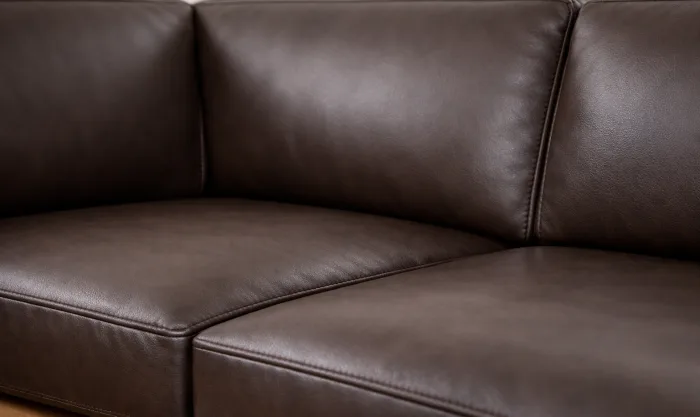
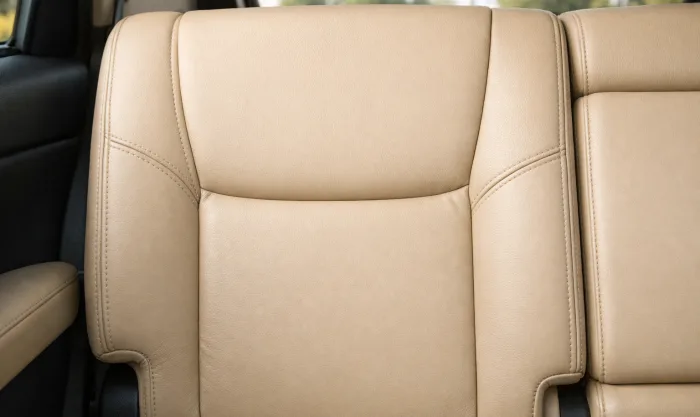
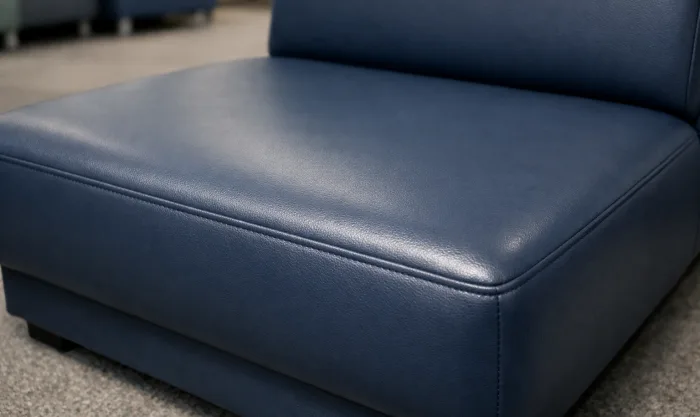
If your leather sofa or armchair still feels intact but looks dull on the arms, headrest, or seat front, you may not be looking at damage yet—you may be looking at buildup. In a dry LA home, body oils, dust, and freeway film can sit on the surface long enough to make the finish look older than it is. The same goes for vinyl: once grime gets worked in by repeated wiping, the piece can start to look cloudy instead of simply dirty. For leather and vinyl cleaning, the order matters. Clean first, then condition.
How do you know it just needs cleaning, not repair?
Start with the simple test: if the color is still there, the surface is not torn, and the material feels smooth but looks tired, cleaning is usually the first move. Look closely at the most handled spots: armrests, headrests, seat bolsters, and the front edge of cushions. If the finish looks darker in those zones, or you can see a dull shine from skin oils, that is usually surface contamination, not a structural problem.
What cleaning will not fix is a crack that you can catch with a fingernail, a flaking coating, or leather that has actually split. If you press the area and it opens, you are past simple cleaning. If the piece is vinyl and the surface is sticky, cloudy, or uneven from old cleaner residue, a proper on-site cleaning may still help, but aggressive scrubbing will usually make it worse. When in doubt, a photo estimate from full upholstery cleaning for leather & vinyl furniture can tell you whether the surface is a good candidate before anyone touches it with product.
What a proper cleaning actually does to leather and vinyl
A real cleaning is not just wiping it down with a damp cloth. On leather, the goal is to lift body oils and dust without flooding the finish or stripping it dry. On vinyl, the product choice matters even more because the surface can haze if the wrong cleaner is used. A technician starts with the material type, checks the wear pattern, and works in controlled passes so the grime comes off evenly instead of smearing into the pores or texture.
In practical terms, the technician should remove loose dust first, use a cleaner that matches the finish, and avoid over-wetting seams and stitched edges. After the surface is clean and dry, conditioning can help leather feel less dry and look more even. That is the key point: conditioning works better on a clean surface. If you condition over body oils and dirt, you are basically sealing in the mess. For a sofa that gets daily use, that mistake can make the leather look greasy in some spots and chalky in others.
If you are comparing options for a chair, sectional, or couch, repairing scratches and scuffs on leather furniture may be the right next step after cleaning if the finish still looks scraped, and remove stains on leather furniture in Los Angeles is the better path when the issue is more than just dullness.
What should you do today to keep the finish from getting worse?
Do not keep scrubbing the same area with all-purpose cleaner. That is how many leather and vinyl pieces end up looking patchy. If the surface is only dirty, leave it alone until it can be cleaned correctly. If you need to use the piece today, keep food, lotions, and pet paws off the problem area and avoid applying random conditioner on top of the grime. On leather, too much product can darken the surface and create a greasy halo. On vinyl, heavy product can leave a slippery film that attracts more dust.
- Blot, do not rub, anything fresh that lands on the piece.
- Stop using harsh household spray on the same spot.
- Check the arms and headrests for matching buildup so the cleaning is even.
- Ask for a material-specific cleaning plan before conditioning.
- Use a technician who works on-site, especially if moving the sofa risks new scuffs.
In LA, this matters because heat, dry air, and sunlight make surface grime show faster. A sofa that looks “faded” in Santa Monica or Sherman Oaks may simply need the film removed before anyone decides it is worn out. If the piece still has good structure, cleaning can buy you time and make the upholstery look cared for again without the cost of replacement. For a closer look at whether your piece is a candidate, local upholstery cleaning for leather & vinyl furniture is the right place to start. If the surface is already cracked or torn, cleaning will not solve that, but it can at least reveal what is actually damaged and what is just dirty.
If you are staring at a dull sofa or armchair today, do not guess. Clean the surface the right way first, then condition only after the grime is gone. That sequence is usually the difference between a piece that looks tired and one that looks simply used.
Before & After